
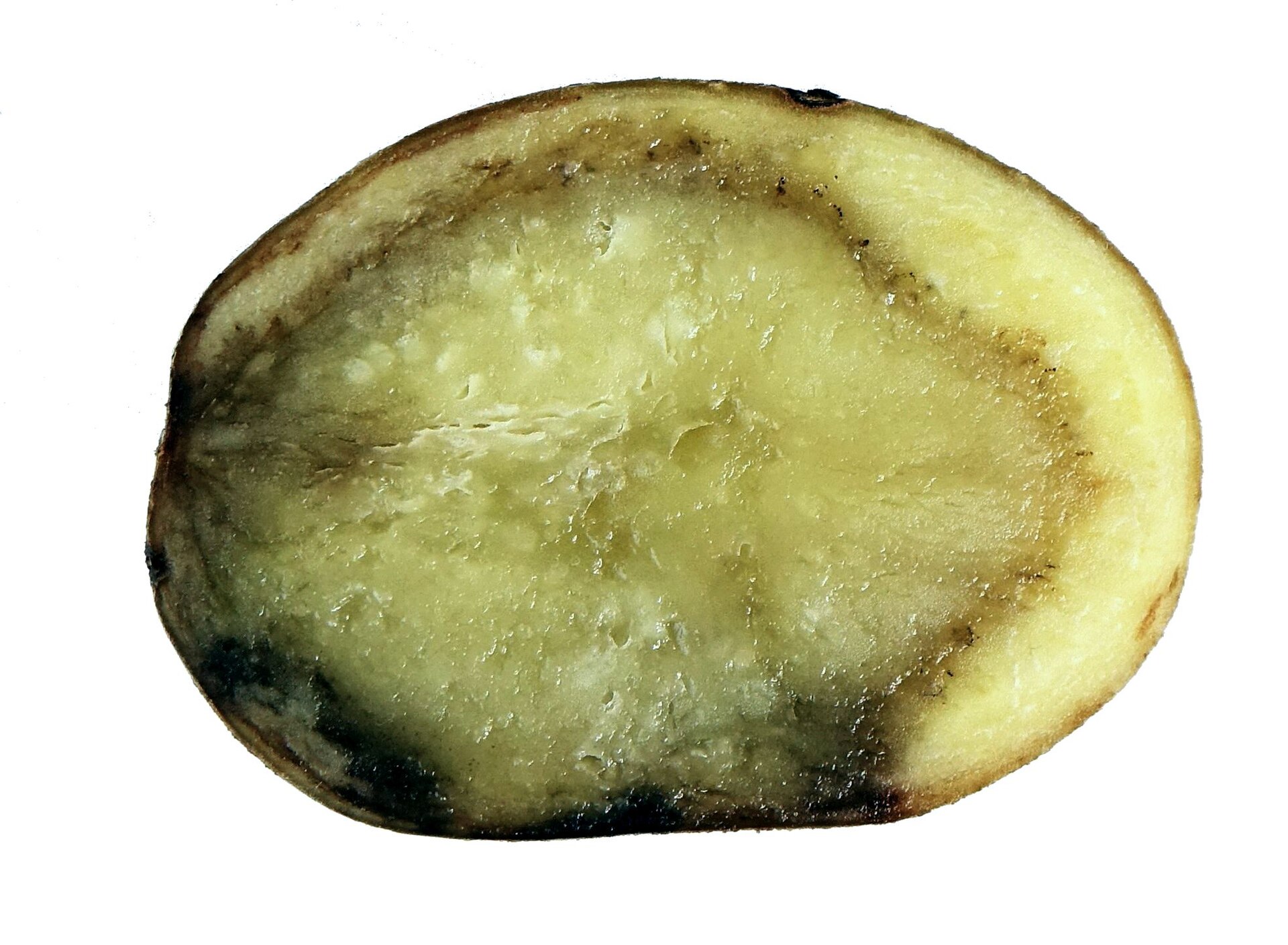
Leak — watery wound rot — is the disease of warm, wet handling: a group of Pythium oomycetes, chiefly P. ultimum, that rot tubers through every fresh wound and then move through the tissue so fast that a sound potato can collapse into a bag of liquid in days. Its common name describes both the symptom and the storage hazard: infected tubers weep, wet their neighbours, and turn a handling error into a storage epidemic.
The rot is distinctive once seen: tissue becomes glassy and water-soaked, the skin splits or slips, and the interior liquefies to a gray, foul-smelling fluid — softer and wetter than fusarium dry rot, without the pink blush of pink rot. Cut a freshly infected tuber and the flesh may exude droplets of moisture; squeeze it later and it runs. Infection enters almost exclusively through wounds — harvester cuts, bruises, wash-line damage, forklift punctures — and the disease races at storage temperatures that would slow most competitors, which is why leak is the classic rot of warm, humid stores and of potatoes moved and washed in hot weather.
The oomycetes behind leak live in soil and in contaminated water; they are not carried as true seed-borne infections but ride on soil films and in wash water, standing water and hydrohandling systems. Tuber-to-tuber spread in store is by contact with leaked fluid, so the disease pattern is clumped — a wound cluster, a wet corner of a box, a hydroflume that was not sanitized — rather than field-uniform. Heavy, wet soils at harvest and warm ambient temperatures push incidence up sharply.
Prevention is handling hygiene, and it is almost entirely in the grower’s hands. The core sequence mirrors dry-rot management with stricter temperature discipline: harvest in the coolest part of the day where possible, keep tubers out of standing water, dry the load quickly after any wet handling, and respect the wound-healing window before pulling temperatures down. Stores and handling lines must be cleaned of rotted debris between crops; wash water, where used, needs continuous disinfection. Deep box fills of warm, wet tubers are the single most common avoidable trigger.
There is no curative treatment for rotted tubers and no resistant variety of practical standing. Registered post-harvest fungicides exist in some markets and are used prophylactically on high-risk lots; their value is secondary to dry handling. Where leak has appeared, the immediate moves are mechanical: pull and dump affected tubers, break the wet-contact chain, drop the store temperature in a controlled step, and trace the wound source in the handling line.
Leak is the simplest of the major rots to understand and the most embarrassing to suffer: it is a wound-and-water disease in a crop that is wounded by every harvest and washed by every packing line. The operations that prevent it — cool, dry, clean, patient — are the same ones that decide storage performance overall, which is why the best stores rarely distinguish leak from background noise.