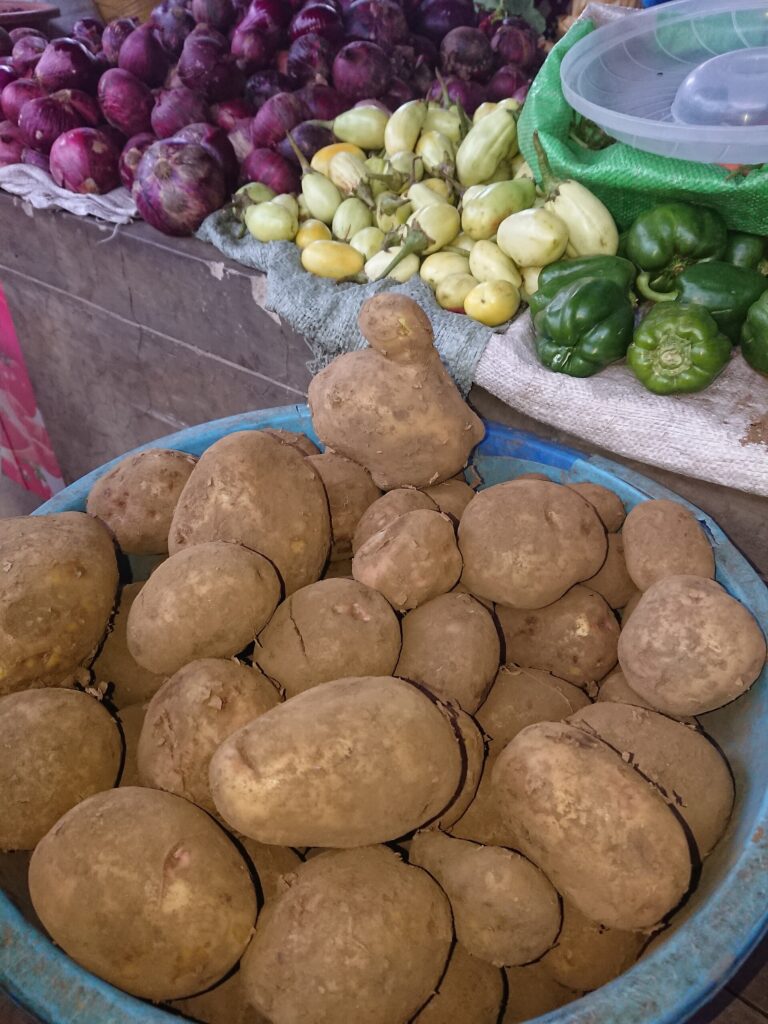
Боливия: Урожай картофеля достиг 1.38 миллиона тонн, но урожайность остается на уровне около 6.5 т/га.
Основные выводы
- 1.38 Mt of potatoes produced in Bolivia in 2024, FAOSTAT
- 6.5 t/ha average yield in 2024, versus 5.8 t/ha in 2000
- 57.6% of output comes from Cochabamba and La Paz together
- 30 million US$ a year spent on imported frozen potatoes
Почему это важно
- Для фермеров
- Look at the 9.9 t/ha achieved in Santa Cruz and Cochabamba; review seed source and irrigation before expanding area in the Altiplano.
- Для процессоров
- Assess local frozen-potato production: imports of about US$30 million a year show existing demand from restaurant chains.
- Для трейдеров
- Expect sharp volume swings after bad Altiplano seasons; losses above 60% were recorded twice in a row.
- Поставщикам
- Offer certified seed and water management packages; the 6.5 t/ha national yield leaves the widest gap in the region.
- Для инвесторов
- Screen storage and processing projects near Cochabamba and La Paz, where 57.6% of the crop is grown.
60-секундное резюме
Bolivian potato farming has expanded in volume without becoming much more productive. The FAO series puts the 2024 crop at 1.38 million tonnes, close to double the figure for 2000 and 18% above a weak 2023, yet the national average barely moved from 5.8 to 6.5 tonnes per hectare. More land, not better technology, explains the growth. Two departments, Cochabamba and La Paz, account for well over half of the harvest, while the high Altiplano suffered losses above 60% in two successive seasons. Bolivians eat roughly 90 to 108 kg per head each year, so the crop is central to food security. Processing is the weak link: restaurant chains buy frozen products abroad worth about US$30 million annually. Seed, irrigation and storage are the obvious gaps for suppliers and investors. Caveat: the import value and variety count come from one undated source, and regional shares refer to the 2020 to 2021 season.
Bolivia produced 1.38 million tonnes of potatoes in 2024, according to FAOSTAT data published by Our World in Data. That is 18% more than the 1.17 million tonnes of 2023. Over 24 years, output nearly doubled from 0.72 million tonnes in 2000.
Yield tells a different story. The national average was 6.5 t/ha in 2024 and 5.8 t/ha in 2000, according to FAOSTAT. In 2023 it fell to 5.6 t/ha. Growth came mainly from a larger planted area, not from better productivity.
Where the crop grows
The research centre CIPCA gives a detailed picture of the 2020–2021 season. Bolivia produced 1,272,649 tonnes on 191,321 hectares. The average yield was 6.65 t/ha. These production figures match the FAOSTAT data for 2021.
В будние дни. Отписаться можно одним щелчком мыши.
Two departments dominate: Cochabamba with 30.3% of output and La Paz with 27.3%. Together they supply 57.6% of the national crop. Productivity differs sharply by region. Santa Cruz reached 9.93 t/ha and Cochabamba 9.85 t/ha in that season. The high Altiplano remains the weakest area. The centre reports crop losses above 60% there in the 2021–2022 and 2022–2023 seasons, caused by adverse weather.
Demand and imports
Potatoes are a staple. CIPCA cites consumption of 108 kg per person per year in 2023, based on IBCE data. National demand is about 1.3 million tonnes. The director of the national potato programme at INIAF gives a range of 90–100 kg per person. He also says the country has 33 registered and certified varieties.
Frozen pre-cooked potatoes are imported for about US$30 million per year, according to the same source. National chicken restaurant chains buy them directly from Argentina, Peru and Canada.
Почему это важно
A yield of 6.5 t/ha is far below neighbouring countries. FAOSTAT shows 19.5 t/ha in Peru and 35.8 t/ha in Argentina for 2024. In volume, the 2024 harvest roughly matched the estimated demand of 1.3 million tonnes. In quality and processing, the country still depends on imports.
The weather risk in the Altiplano is structural. Losses above 60% in two consecutive seasons show how exposed highland farms are. Better seed, irrigation and storage are the main levers for growers. The market for frozen potato products is a separate opportunity for processors.
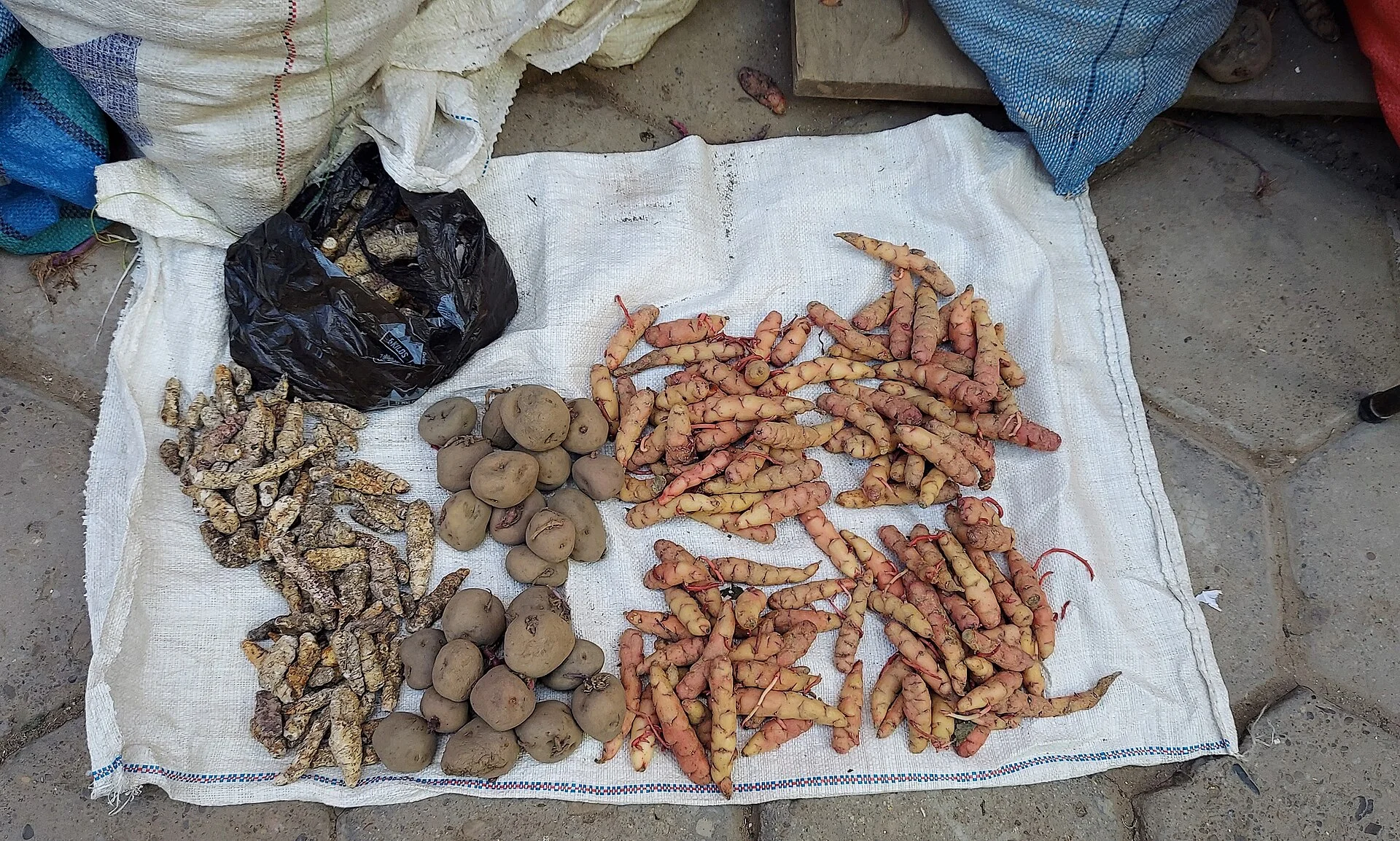
Photo: Potatoes for sale in Copacabana, Bolivia (illustrative). P. Hughes / Wikimedia Commons, CC BY 4.0
Глобальный обзор картофеля
Пять главных новостей, цены, оповещения о заболеваниях и события. По будням утром, без рекламы.
Что дальше
The texts give no forecast. The key unknown is whether weather in the Altiplano allows yields to hold above 6 t/ha.
Источники
- CIPCA — La papa en Bolivia, situación actual y alternativas — https://cipca.org.bo/analisis-y-opinion/articulos-de-opinion/la-papa-en-bolivia-situacion-actual-y-alternativas
- IBCE — Bolivia tiene 33 variedades de papa, pero baja capacidad de producción — https://ibce.org.bo/principales-noticias-bolivia/noticias-nacionales-detalle.php?id=87344
- FAOSTAT через Our World in Data, производство картофеля — https://ourworldindata.org/grapher/potato-production
- FAOSTAT через Our World in Data: Урожайность картофеля — https://ourworldindata.org/grapher/potato-yields
- Импорт фри 30 млн долл. и 33 сорта — ОДИН ИСТОЧНИК
Ссылка на этот материал
- Страна
- Боливия
Связанные истории
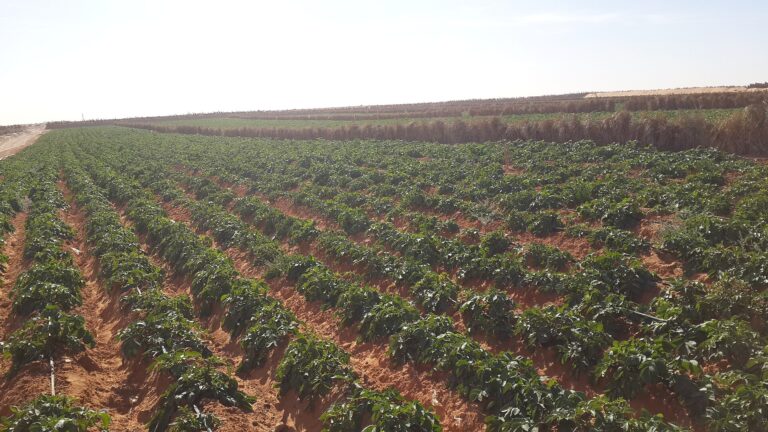
Марокко: Производство картофеля удвоилось с 2000 года и достигло 2.19 млн тонн, урожайность составила 32.8 т/га.

Нидерланды: Засуха сократила урожайность зимнего картофеля на 962 кг/га в год, сообщило Счетное управление.