USDA Spot Report: Large Idaho Russets Command $22–24 per Carton as Small Counts Lag at $11–15
USDA’s 9 October spot report puts large Idaho Russet Burbank cartons at $22–24, while small counts trade at $11–15.
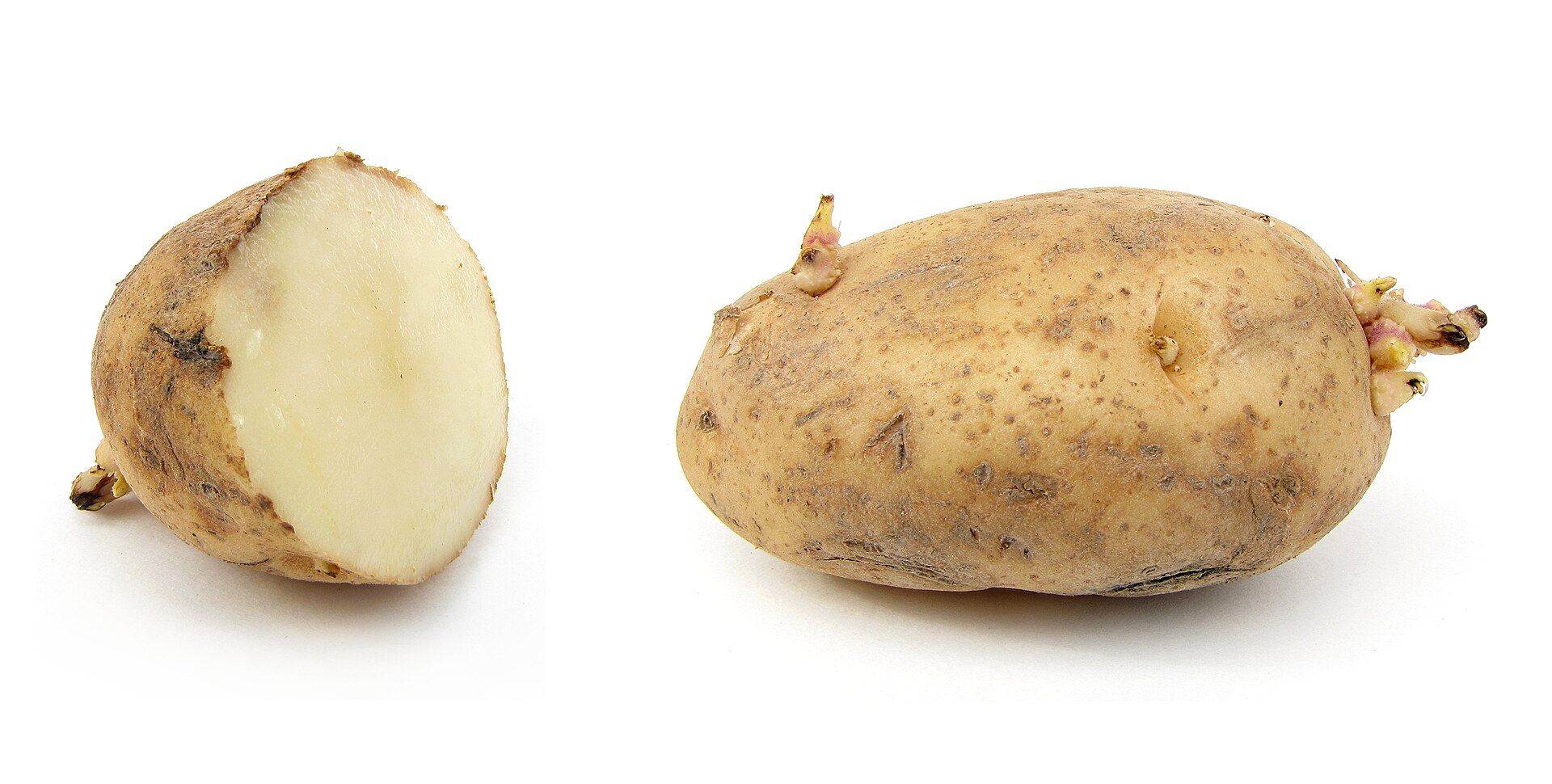
The USDA’s National Potato and Onion Report of 9 October shows demand for Idaho carton 40–80-count russets exceeding supply, with 50-lb cartons of Norkotah 40s at $22–24 — double the price of 100-counts.
The latest USDA Agricultural Marketing Service National Potato and Onion Report — Volume CVIII, Number 192, issued Friday 9 October 2026 — puts hard numbers on the size-driven tension in the US potato market. (No report was issued on Monday 12 October for Columbus Day; the next edition was due Tuesday 13 October.)
In the Upper Valley, Twin Falls-Burley district of Idaho, demand for carton 40–80s exceeds supply while other categories see moderate interest. The market is quoted higher for Burbank baled, carton 60–70s and Norkotah carton 40–80s, lower for Burbank 90s, and about steady elsewhere. Russet Norkotah U.S. One 50-lb cartons traded at $22.00–24.00 for 40s and 50s (mostly $23.00), $21.00–23.00 for 60s and 70s (mostly $22.00), $16.00–17.00 for 80s (mostly $17.00), $13.00–14.00 for 90s (mostly $13.00) and $11.00–12.00 for 100s (mostly $11.00). Russet Burbank cartons ran $22.00–24.00 for 40s and 50s, $22.00–22.50 for 60s and 70s, $17.00–18.00 for 80s, $13.50–15.00 for 90s and $11.00–13.00 for 100s. The gradient is unambiguous: the largest tubers earn roughly double the smallest counts.
Other shipping points tell the same story in milder form. Central Wisconsin reported moderate demand and a steady market, with Norkotah cartons mostly $20.00 across 40s–70s, $17.00 for 80s, $15.00 for 90s and $12.00 for 100s. In the Columbia Basin of Washington and Oregon’s Umatilla Basin — moderate demand, steady market — Norkotah cartons were $18.00 for 40s and 50s, mostly $17.00 for 60s and 70s, $14.00–16.00 for 80s, mostly $12.00–13.00 for 90s and mostly $11.00 for 100s. Colorado’s San Luis Valley saw carton 40–80s trend higher (mostly $21.00 for 40s through 70s) while baled prices slipped slightly lower.
Baled and lower-grade pricing fills out the picture. In Idaho, Norkotah baled 10 5-lb film bags ran $5.00–6.00 (mostly $6.00) and baled 5 10-lb mesh sacks $4.50–5.50 (mostly $5.50); U.S. Two 50-lb sacks with a 6-ounce minimum traded at $9.50–11.00, while 10-ounce minimums reached $16.00–18.00. Burbank U.S. Two sacks posted $10.75–11.00 at the 6-ounce minimum and $17.00 at 10 ounces, occasional higher and lower. In Central Wisconsin, baled Norkotah size A fetched $9.00–11.00 for 5 10-lb film bags and $10.00–12.00 for 10 5-lb bags (mostly $10.00 and $11.00). Colorado’s San Luis Valley baled size A ran slightly lower at $9.00–9.50 and $10.00–10.50, and Washington–Oregon U.S. Two 10-ounce minimum sacks traded at $9.00–11.00, occasional higher.
The report also tracks cross-border movement: Canadian imports stand at 1,154 thousand cwt season-to-date against 805 at the same point last season — a reminder that tight U.S. size profiles can pull supply across the border.
The shipments table adds context: season-to-date movement in thousands of hundredweight stood at 4,568 for Idaho against 5,482 at the same point last season, while Colorado (1,223 vs 1,174), Washington (1,060 vs 931) and Wisconsin (1,276 vs 1,083) all ran ahead of last year; the all-areas total was 15,675 versus 14,717. Idaho’s slower start squares with industry reporting of lower yields and smaller size profiles in the state this season.
Prices represent open (spot) market sales by first handlers on product of generally good quality and condition; brokerage fees paid by the shipper are included, and delivered sales on a shipping-point basis exclude freight. In USDA Market News terminology, “mostly” means 51–90% of reported sales.
Sources: USDA AMS National Potato and Onion Report, Vol. CVIII No. 192, 9 Oct 2026