Павлодарский феномен: как картофель меняет сельское хозяйство в Казахстане
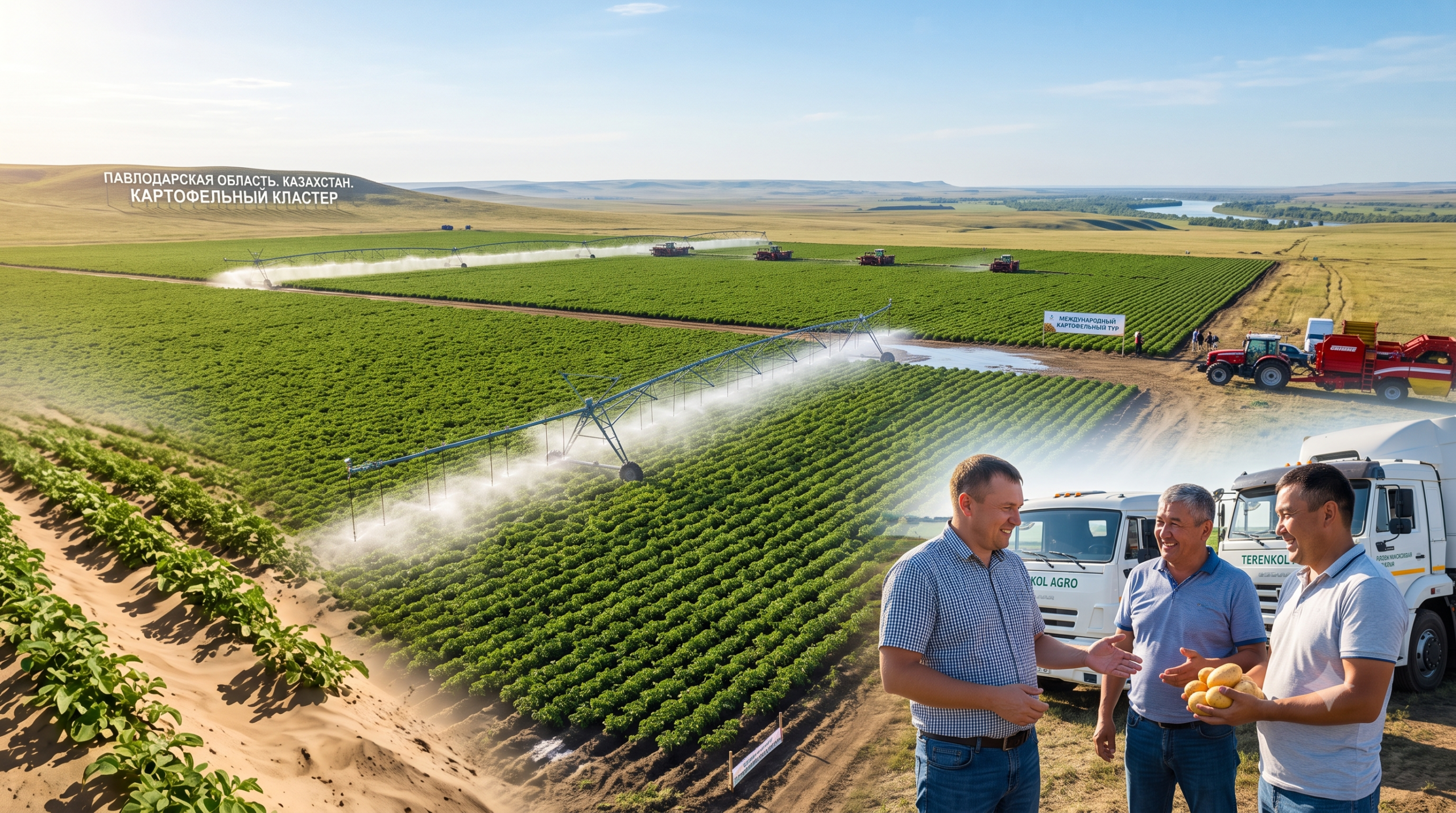
Специальный репортаж с Международного картофельного тура: Павлодарская область, Казахстан
Сегодня Павлодарская область — один из ключевых картофелеводческих кластеров в Казахстане. В рамках нашего Международного картофельного тура мы посетили Железинский и Теренкольский районы, чтобы своими глазами увидеть, как местные фермеры собирают рекордные урожаи на песчаных почвах в условиях аномальной жары и нехватки ресурсов. Они обеспечивают “второй хлеб” не только для своего региона, но и для столицы, экспортируя свою продукцию в южные страны.
Sand and Sun: Perfect Washing and Harsh Dunes


The specifics of potato farming in this region are dictated by nature itself. The local soils are predominantly sandy. On one hand, this is an undeniable advantage during the harvest.
“Если нет дождя во время сбора урожая, наш картофель выходит идеально чистым, как будто прямо из стиральной машины,” — делится Дмитрий Козинец, глава крестьянского хозяйства “Теренколь Агро”, который перешёл в сельское хозяйство из транспортного бизнеса в 2017.
However, sand has its dark side—severe wind erosion. Timur Kabdulov, head of the “KAP” peasant farm, who cultivates 550 hectares of potatoes, talks about battling the elements:
“We have terrible wind erosion here. If you make a classic fallow land with soil cultivation, dunes 50 centimeters high grow right at the end of the fields. Therefore, I try not to touch the soil; I use chemicals and sow oats to secure the topsoil.”
Вторая проблема — климат. Аномальная жара (более 30°C в течение месяца) требует непрерывного орошения. Фермеры выливают 15-20 мм воды, и оросительные машины не останавливаются ни на минуту.
From Grain to Vegetables: Economics and Profit Margins
It is interesting to observe how the profile of the farms is changing. Many managers and agronomists were staunch “grain growers” in the past. What makes them switch to vegetables? The answer is simple: economics.
For large livestock complexes, potatoes become a financial cushion. Nikolay, an agronomist at a young farm with 5,000 heads of cattle, explains this strategy:
“Выращивание кормов в нашей неорошаемой (багара) зоне очень сложно. Мы ввели орошаемые участки, построили водохранилища и пробурили скважины глубиной 850 метров. Это огромные заёмные средства. Требуется много времени, чтобы корм вырос, а корова дала молоко. Но картофель и морковь означают готовые деньги. Мы выращиваем их, продаём, и в том же году у нас есть оборотный капитал для погашения долгов.”
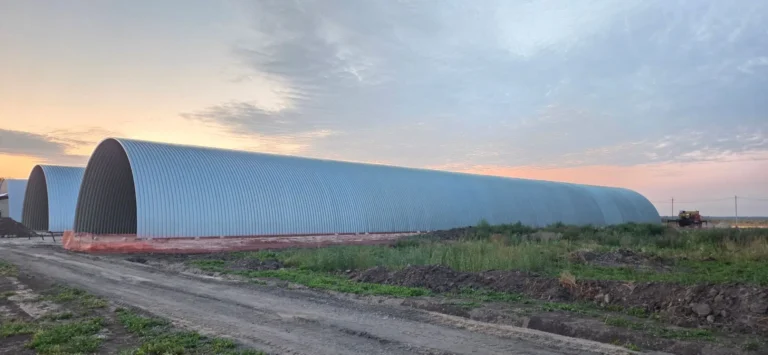
The entry barrier to this business is high today. According to Dmitry Kozinets, with the capital he started with 9 years ago (buying an old Soviet DDA sprinkler system), he could only manage about 10 hectares today. Now, farmers use modern frontal and pivot machines, powerful equipment (such as Grimme), and build state-of-the-art vegetable storages with government support (subsidies for storage facilities are about 800,000 tenge per ton, and up to 30% for elite seeds).
Бесспорный лидер: сорт Гала
There is a monopoly of one variety in the fields of the Pavlodar region. The vast majority of farms rely on the Gala variety. The reasons are pragmatic: excellent keeping quality, stable yield, and high market demand. Experiments with red varieties show that local clients and buyers from Uzbekistan (the main export destination) prefer yellow potatoes.
Farmers try to purchase seeds of the highest reproduction (elite seeds are even imported from Germany) and propagate them on their farms, providing themselves with excellent quality planting material for several years ahead without losing yield.
Agronomy: The Battle for Tuber Health
Картофельный урожай требует огромного внимания. Эльдар Усманов, агроном в “Astyk PV” ТОО (2,500 гектара под орошением), сравнивает свою работу с медициной:
“A potato is like a living creature. It needs a lot of attention; you have to constantly monitor it. The plant is alive, and we are its doctors. We must ensure that it stays healthy.”
And there is plenty to treat. Under intensive irrigation, farmers face a complex of diseases:
- Ризоктониоз (чёрная парша): Одна из основных проблем на лёгких почвах, приводящая к трещинам в клубнях. Борьба ведётся путём применения современных фунгицидов (азоксистробин, флудиоксонил) непосредственно во время посадки.
- Alternariosis (early blight): Appears during heat stress, starting in late June.
- Late Blight (Phytophthora): Although not an annual disaster, it keeps farmers on high alert. The number of preventive treatments in some farms has grown from 2 to 8-9 per season.
- Вредители: Нематоды и проволочники также требуют корректировки севооборота и использования инсектицидов (например, фипронила).
Схема питания также интенсивна. Впечатляющие дозы вносятся в почву перед посадкой и окучиванием: 500 кг диаммонийфосфата (DAP), хлорида калия и сульфата, а также селитры.
Infrastructural Barriers: Water and Electricity
The main obstacle to the development of irrigated agriculture in the region today is not a lack of land or equipment, but an electricity shortage.
According to Eldar Usmanov, when the active irrigation season begins and neighboring large farms simultaneously turn on dozens of pumping stations, there is a catastrophic lack of voltage in the grid.
The second problem is access to water. Farms located far from the Irtysh River (up to 150 km) have to drill ultra-deep wells (up to 850 m) with low yields (only 20 l/s) and build huge storage ponds, which requires massive investments.
The Human Factor
Несмотря на жару, песчаные бури, болезни растений и перебои с электричеством, люди, работающие здесь, действительно увлечены своим делом. Большинство хозяйств являются семейными, где опыт передаётся от отцов к детям, а обязанности чётко распределены между братьями и сёстрами (как, например, в крестьянском хозяйстве “Кундыз”, которое выросло с 40 гектаров в 1993 до 15,000 гектаров сегодня).
When asked what gives them strength when they feel like giving up, the farmers unanimously answer: the support of their families, love for their work, and, of course, the magic of the result.
“Самая приятная часть для меня — это процесс сбора урожая,” — подытоживает агроном Николай. “Когда ты видишь, что ты вырастил за сезон, и ты собираешь это, в твоём сердце радость, когда всё получилось и идёт гладко.”