Бывший СССР: Производство картофеля всего лишь на 12% ниже 1990, однако урожай сместился на юг
Россия, Беларусь, страны Балтии и Молдова выращивают почти на 20 миллионов тонн меньше, чем в 1990. Центральная Азия и Южный Кавказ производят примерно на 7.8 миллионов тонн больше.
Автор Виктор Ковалеев, POTATOES NEWS
В 15 странах, ранее входивших в состав Советского Союза, было собрано около 56 миллионов тонн картофеля в последних отчетных сезонах. Это всего лишь на 12% меньше, чем 63.6 миллионов тонн, собранных Советским Союзом в 1990, согласно советским статистическим ежегодникам, национальным статистическим службам и данным FAOSTAT.
Общая картина скрывает обратную тенденцию. На севере и западе бывшего союза большая часть урожая была потеряна. Сейчас юг производит многократно больше, чем во времена советской системы.
1990 был выбран в качестве базы, потому что это последний год, за который советская статистика даёт полный расклад по республикам. Общий сбор урожая по союзу в 1991 составил 64.8 миллионов тонн, близко к уровню 1990. Для одной только России урожай 1991 года составил 34.3 миллионов тонн против 30.8 миллионов тонн годом ранее.
Для текущих показателей POTATOES NEWS использовала окончательные или предварительные национальные данные для 2025, когда они были доступны: Россия, Беларусь, Казахстан, Узбекистан, Кыргызстан, Таджикистан и Грузия. Для остальных восьми стран использовался последний год FAOSTAT — 2024.
| Страна | 1990, млн т | Последние данные, млн т | Год, источник | Изменение |
|---|---|---|---|---|
| Россия | 30.8 | 19.5 | 2025, Росстат | -37% |
| Украина | 16.7 | 21.1 | 2024, FAOSTAT | +27% |
| Беларусь | 8.6 | 3.0 | 2025, Белстат | -65% |
| Узбекистан | 0.34 | 4.16 | 2025, Национальный комитет статистики | x12 |
| Казахстан | 2.3 | 2.84 | 2025, Бюро национальной статистики | +24% |
| Таджикистан | 0.21 | 1.33 | 2025, Статистическое агентство | x6 |
| Киргизия | 0.37 | 1.17 | 2025, Национальный статистический комитет | x3.2 |
| Азербайджан | 0.19 | 0.95 | 2024, FAOSTAT | x5 |
| Туркмения | 0.04 | 0.82 | 2024, FAOSTAT | x20 |
| Армения | 0.21 | 0.34 | 2024, FAOSTAT | +61% |
| Литва | 1.6 | 0.27 | 2024, FAOSTAT | -83% |
| Грузия | 0.29 | 0.21 | 2025, Geostat | -28% |
| Молдова | 0.30 | 0.14 | 2024, FAOSTAT | -55% |
| Латвия | 1.0 | 0.13 | 2024, FAOSTAT | -87% |
| Эстония | 0.62 | 0.07 | 2024, FAOSTAT | -89% |
| Итого | 63.6 | about 56.0 | -12% |
Grouped by region, the picture is clear. Russia, Belarus, the three Baltic states and Moldova harvested 42.9 million tonnes in 1990 and about 23.1 million tonnes now, a loss of 19.8 million tonnes. The five Central Asian countries went from 3.3 to 10.3 million tonnes. The three South Caucasus countries went from 0.7 to 1.5 million tonnes.
Так куда же делись советские картофелины? В большинстве случаев их вообще никогда не выращивали для употребления людьми.
Belarus is the clearest example. In 1990 the republic harvested 8.6 million tonnes, which by the author’s calculation is about 840 kg for each of the 10.2 million inhabitants counted in the 1989 census. No population eats that much. The crop fed pigs, supplied starch and spirit plants, and was shipped out.
According to the Seventeen Moments in Soviet History archive project at Michigan State University, more than a million tonnes of Belarusian potatoes went every year to Moscow, Leningrad and other Soviet cities and republics. A 1972 report from the republic’s leaders to Leonid Brezhnev lists more than 1 million tonnes of ware potatoes and 150,000 tonnes of seed potatoes sent to all-Union reserves in that season alone.
В 2025 Беларусь собрала 3.0 млн тонн при средней урожайности 21.9 т/га, сообщает Белстат. Хозяйства агропредприятий собрали лишь 379,900 тонн от этой цифры; большая часть урожая теперь поступает с приусадебных участков. Это всё ещё примерно 330 кг на человека — один из самых высоких уровней в мире, однако роль картофеля изменилась.
Shipments to Russia are now counted in tens or hundreds of thousands of tonnes, not millions. In 2024 Belarus was the largest supplier of potatoes to Russia, with 193,800 tonnes, Myfin.by reported. After a poor 2024 harvest, Minsk introduced export licensing, and in January–July 2025 Russia imported only 32,100 tonnes of Belarusian potatoes, according to the Russian Potato Union.
The Baltic states lost even more: between 83% and 89% of their 1990 volume. Lithuania harvested 1.6 million tonnes then and 0.27 million tonnes in 2024. The likely explanation is the same as in Belarus: a large part of the Soviet crop had a market only inside the Soviet feed and supply system. The exact share used for feed by republic still has to be taken from Soviet balance sheets.
Central Asia shows the other side of the same story. In 1990 Uzbekistan grew 0.34 million tonnes of potatoes for about 20 million people, roughly 17 kg per person. The rest had to come from other republics. Even in the 1990s, after independence, Uzbekistan still imported about half of the potatoes it consumed, according to a study by Kim and Hasanov (2013) cited in the European Scientific Journal.
In 2025 Uzbekistan’s national statistics committee reported 4,160,185 tonnes, twelve times the Soviet level. The Samarkand region alone produced 773,598 tonnes, more than twice what the whole republic grew in 1990.
The calendar explains much of this growth. Irrigated fields in the south can be planted in late winter and harvested in May and June, and a second crop can follow. By the end of June 2025, Uzbek farms had already dug 1.9 million tonnes, close to half of the annual total. A northern grower has one harvest a year. A grower in the Fergana Valley may have two.
Policy did the rest. In 1989 the republic gave more than 400,000 hectares of irrigated land to households for garden plots, according to Uzbekistan’s mission to the United Nations. A 2015 presidential decree ordered 170,500 hectares of cotton land to be switched to fruit, vegetables, potatoes and other food crops. A presidential resolution of September 8, 2025 added new measures to raise potato output and develop seed production. For 2026, the Ministry of Agriculture targets 4.5 million tonnes. Potatoes were planted on 238,000 hectares of main fields, 46,000 hectares more than a year earlier, and on another 71,000 hectares after the grain harvest, from which the ministry expects 1.2 million tonnes in November.
The same trend runs through the region. Tajikistan grew six times more than in 1990 and Kyrgyzstan more than three times more, according to their national statistics offices. Turkmenistan’s figure rose from 0.04 to 0.82 million tonnes, although the country publishes little detailed agricultural data, so this number is the least reliable in the table.
Для производителей на севере это имеет прямое значение. Поток картофеля из России и Беларуси на юг, существовавший в советское время, во многом утратил свою рыночную значимость.
Uzbekistan still buys potatoes abroad, but from its neighbours and from the south. In January–August 2025 it imported 490,800 tonnes, according to its statistics committee: 299,400 tonnes from Pakistan, 110,000 tonnes from Kazakhstan, 34,800 tonnes from Afghanistan and 18,100 tonnes from Kyrgyzstan. Russia supplied 15,400 tonnes. In the first half of 2026, Kazakhstan alone accounted for 337,900 of the 421,900 tonnes imported. Local analysts link these purchases to seasonality, quality and the gap between harvests rather than to a shortage of domestic potatoes.
Казахстан показывает, насколько волатильна стала эта торговля. Страна собрала 2.84 млн тонн в 2025, что на 7.9% больше, чем годом ранее, согласно данным Бюро национальной статистики страны. В 2024 страна экспортировала рекордные 564,000 тонн соседям с более высокими ценами, после чего столкнулась с дефицитом дома, запретила экспорт на шесть месяцев начиная с января 2025 года и была вынуждена импортировать. В первой половине 2025 крупнейшими поставщиками были Китай с 115,800 тоннами и Пакистан с 42,700 тоннами, сообщает EastFruit. Поставки из России упали с 50,500 тонн в 2024 до 3,200 тонн в январе-апреле 2025, сообщает Министерство сельского хозяйства, цитируемое агентством Bes.media. По словам Минсельхоза, его балансы были существенно пересмотрены после полевых исследований, поэтому межгодовые сравнения требуют осторожности. Павлодарская область является крупнейшим производителем страны, собрав около 711,600 тонн в 2025.Наш предыдущий отчёт рассматривал изменения в сельском хозяйстве Павлодарской области благодаря картофелю.
Russia’s decline also needs a closer look. Rosstat reports 19.5 million tonnes for 2025, 9.3% more than in 2024. Households produced 11 million tonnes, agricultural enterprises 5.2 million tonnes and farmers 3.3 million tonnes. The organised sector, enterprises and farmers together, harvested 8.47 million tonnes, 16% more than a year earlier.
Russia also imports more than before, and from the south. In January–July 2025 it brought in 856,400 tonnes of potatoes, three times more than a year earlier, according to the Russian Potato Union: 517,800 tonnes from Egypt, 144,600 tonnes from China, 60,500 tonnes from Azerbaijan and 43,800 tonnes from Georgia. Russian exports go the other way in much smaller volumes: more than 100,000 tonnes in the first months of 2026, mainly to Kazakhstan, Turkmenistan and Tajikistan, URA.ru reported.
The industrial use of the crop has changed as well. Where Soviet farms fed surplus potatoes to pigs, today’s outlet is processing. The Potato Union estimates that Russia processed about 1.5 million tonnes of potatoes in 2020 and expects the volume to pass 3 million tonnes.
Приусадебные участки не взвешиваются; их продукция оценивается. Росстат несколько раз пересматривал данные по картофелю на миллионы тонн. Согласно этим данным, производство на личных участках выросло в 1.8 раз между 1990 и 1995 годами. Экономист Игорь Калабеков, составивший советский и российский ряды данных, считает эти оценки завышенными. Часть падения поставок с начала 1990-х годов является, таким образом, статистическим эффектом, а не реальной потерей предложения.
Yields changed the balance as well. In 1990 the average Soviet potato yield was 10.9 t/ha, compared with 32.9 t/ha in the United States and 36.5 t/ha in the United Kingdom. With typical planting rates of 2.5 to 3 tonnes of seed per hectare, a field yielding 11 t/ha has to put back a quarter of its crop as seed. At 30 t/ha, the share falls to about a tenth. Higher yields mean fewer tonnes are needed to put the same amount of food on the table.
Украина остаётся единственным крупным производителем, превышающим уровень 1990, произведя 21.1 млн тонн в 2024 году, согласно FAOSTAT. Эта цифра носит оценочный характер. Украина’s Национальный научный центр Институт аграрной экономики ожидал, что 2025-й урожай достигнет по крайней мере 20 миллионов тонн. Государственная служба статистики Украины прекратила публикацию оценок производства домохозяйств, ссылаясь на недостаточное качество данных, хотя домохозяйства выращивают почти весь картофель страны. Аграрные предприятия сообщили о сборе 384,000 тонн в 2024-м году. Консалтинговая компания Pro-Consulting утверждает, что общенациональная цифра примерно в 20 миллионов тонн была завышена уже давно.
Ukraine is also importing more. In 2025 it bought 123.6 thousand tonnes of potatoes abroad, 2.4 times more than in 2024, mainly from Poland, Egypt and the Netherlands, according to the State Customs Service.
На Южном Кавказе Азербайджан вырастил в пять раз больше, чем в 1990-м году, Армения — на 61% больше. Грузия произвела на 28% меньше. Урожай Молдавии упал более чем наполовину.
The figures are a mix of final statistics, preliminary data and FAOSTAT estimates, and household output in most of these countries is estimated rather than measured. The overall direction, however, is consistent across all sources: the potato crop of the former Soviet Union has moved from the north-west to the irrigated south. The trade map has turned too: potatoes now move north, from Egypt, China, Azerbaijan and Georgia into Russia, and from Pakistan and Kazakhstan into Uzbekistan.
Таможенная запись: от внутреннего урожая до глобального торгового товара
For most of the twentieth century potatoes barely appeared in the foreign-trade books of these countries: inside the USSR the crop moved between republics, not across customs borders. A genuine external trade emerged only in the 2000s. Russia built its exports up to a record of around 415,000 tonnes by 2020, then reversed into an importer: in the first months of 2025 imports of fresh potatoes rose about 3.5 times, to roughly 432,000 tonnes.
Текущие направления торговли отражают карту Советского Союза. Россия сейчас покупает преимущественно у Египта, который поставляет около половины всех импортированных клубней, затем идут Китай (в топ-3 впервые за шесть лет, главным образом для Дальнего Востока), Азербайджан, Грузия и Беларусь. Беларусь стабильно экспортирует около 200,000 тонн картофеля ежегодно и остается крупнейшим поставщиком семенного картофеля в Россию по объему в обычный год. Узбекистан сменил поставщиков: ранее зависимый от Пакистана, теперь он получает около 80% своего импорта из Казахстана. Казахстан сам стал своеобразным маятником, экспортировав рекордный объем примерно в 620,000 тонн в 2024-м году, вызвав внутренний дефицит, после чего начал импортировать продукцию из Китая и Пакистана. Украина перешла от статуса экспортера к импортеру, увеличив закупки на 2025% и более чем в пять раз, преимущественно из Польши и Египта.
Thirty years ago the flow ran strictly from north to south: the Russian Federation, Belarus and northern Kazakhstan fed Central Asia and the big cities. Today the direction is reversed. The region has gone from a closed intra-Soviet system to a net importer from far abroad — Egypt, China, Pakistan — and the potato has turned from a local staple into a position on the global trade map.
Южный Кавказ: мелкие производители, все смотрят на север
The three Caucasus republics — Georgia, Armenia and Azerbaijan — are modest producers, yet they show the same reversal in sharp relief. Georgia is the standout: potato exports jumped roughly thirty-fold, reaching about 78,000 tonnes in the first half of 2025 (worth some USD 26.5 million), against a tiny base a year earlier, with close to two-thirds going to Russia and the rest to Azerbaijan and Armenia. Azerbaijan is scaling up too, exporting about 70,800 tonnes in January–July 2025, up 47% by volume year on year. Armenia has flipped outright: long a net importer, it became an exporter in 2024, shipping around 2,500 tonnes — mainly to Russia and Georgia — where a year earlier it exported none. Even the smallest growers of the former Soviet space now send their surplus north.
Урожай 2026: кто будет испытывать нехватку, а кто избыток?
The 2026 campaign is running below the previous year. Russian growers expect roughly 8 million tonnes in the organised sector, about 6% less than in 2025, after heavy rain in the Urals and drought in Siberia. Even so, Russia covers its own needs: self-sufficiency stood at 97.9% in 2025, above the 95% threshold of the Food Security Doctrine, and average yields in the organised sector are actually running a few centners per hectare above last year.
Наиболее вероятные зоны дефицита этой осенью будут Уральский регион, пострадавший от дождей, и засушливая Сибирь; профицит и рыночный баланс обеспечат Центральный федеральный округ и юг России, включая Дальний Восток (Приморский край), где зафиксирована урожайность выше прошлогодней. В регионе Казахстан снова рискует скатиться в дефицит после рекордного экспорта, Беларусь сохраняет стабильность, а Центральная Азия закрывает всё большую долю собственного спроса. Ранневесенний разрыв поставок весной и ранним летом вновь заполнится продукцией из Египта и Пакистана. При отсутствии резких погодных изменений в последние недели сбора урожая баланс предполагает достаточное внутреннее снабжение в России при снижении цен производителей, тогда как некоторые регионы Центральной Азии и Кавказа окажутся в более сложной ситуации, зависящей от импорта.
One question remains open: the Soviet balance sheets, which show how much of the crop went to feed, seed and losses in each republic. They will show how much of the missing volume was once food, and how much was never needed at all.
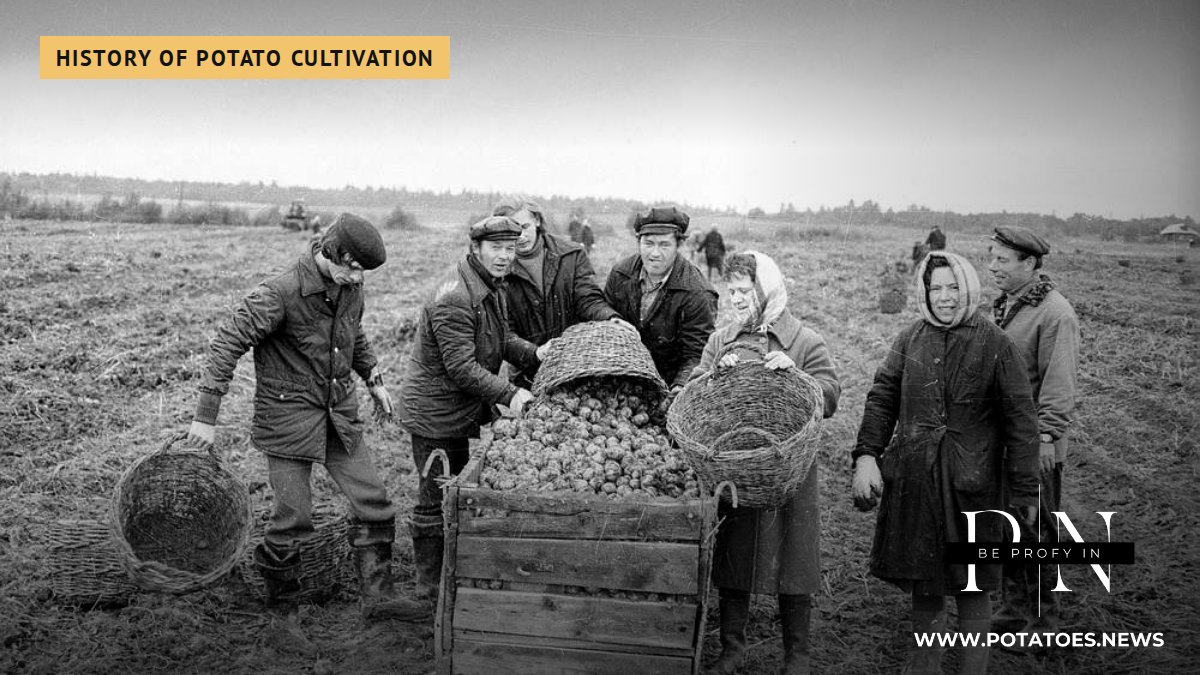
Фото: Работники мебельной мастерской Переславля помогают совхозу Глебовский с уборкой картофеля в Ярославской области, 1978 (иллюстративное). В. С. Спиридонов / Wikimedia Commons, CC BY-SA 3.0